
COO @ Quorivex Systems
We wanted to automate a few workflows but weren't sure where to start. Lampros helped us cut through the noise and get something useful into production quickly.

CTO @ Teralynx Systems
They picked up our processes surprisingly fast and built around how we already worked instead of forcing us into a new system.

Financial Technology Company
We saw value pretty quickly. A lot of repetitive work that used to take hours every week simply stopped being a problem. Our team could focus on higher-value work instead.
Contact Us
Ready to Ship AI Systems to
Let's align architecture, execution, and delivery from day one.
Published On Jul 15, 2025
Updated On Jul 15, 2025
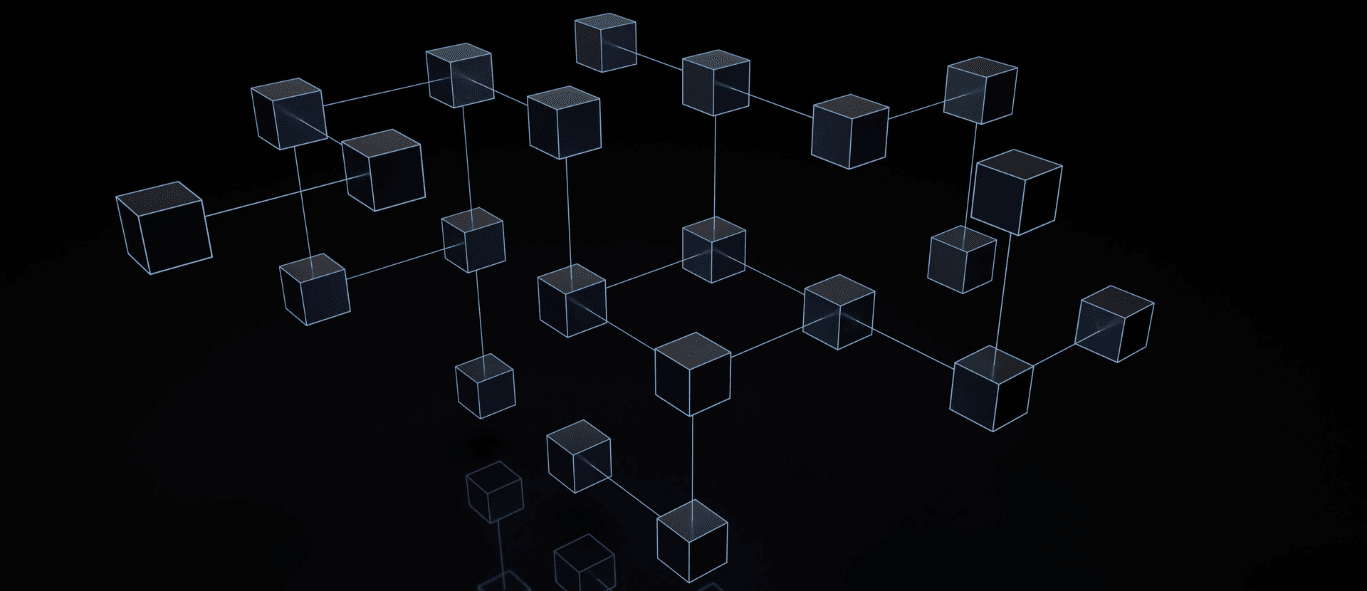
Blockchains don’t slow down because of user growth. They slow down because of architectural weight.
Every contract, token, and transaction contributes to a single and shared state that every node must store, verify, and update continuously.
Over time, this accumulation becomes a bottleneck not just for throughput but also for decentralisation itself.
Full nodes become harder to run, sync times stretch, and costs rise. This isn’t a hardware issue. It’s a design constraint.
Sharding emerged as a structural response. By splitting execution and state across coordinated shards, networks can scale horizontally by processing more, storing less per node, and preserving trust assumptions.
In this blog, we go beyond the surface-level definition of sharding to examine what it truly solves, how it’s being implemented in production networks, and why it’s shaping the future of modular blockchain design.
Let’s get started.
Sharding is a method of scaling blockchain networks by dividing them into smaller, parallel units called shards. Each shard handles its subset of transactions and stores a portion of the global state.
Instead of requiring every node to process everything, sharding distributes the workload across the network, thus reducing redundancy, increasing throughput, and maintaining trust through coordinated validation across shards.
Sharding matters because of:
Unlike short-term solutions like batching or compression, sharding addresses the structural limitations of single-chain architectures.
It turns the chain from a single execution engine into a distributed system that scales horizontally, more like a cloud network than a single machine.
Protocols like Ethereum, Near, and zkSync are building toward shard-aware architectures, each with a slightly different approach.
But the core goal remains the same, i.e. to support more users, more apps, and more data, without increasing the cost of participation.
Sharding works by dividing a blockchain network into smaller parts, called shards, that each handle their own transactions and state updates.
These shards operate in parallel, enabling greater throughput and reduced hardware requirements for participants.
But building a secure and scalable sharded network requires changes across execution, consensus, communication, and data availability.
Let’s break down how each layer of a sharded system functions in practice:
Each shard functions like a lightweight execution environment with its own block history and evolving state.
To maintain security, the network assigns validators to shards using cryptographic randomness or periodic rotation.
This prevents any single group from dominating a shard or manipulating its state.
In protocols like Ethereum, the Beacon Chain handles this assignment, ensuring validator distribution remains unpredictable and trust-minimised.
Once shards are formed and validators are assigned, each shard:
These operations happen in parallel, which drastically increases network throughput.
To avoid fragmentation, all shard outputs are eventually settled on a shared consensus layer, where finality is achieved.
This layer verifies the validity of shard blocks and ensures consistency across the system.
Ethereum’s Beacon Chain and Near’s Nightshade 2.0 model are examples of this shared settlement design.
Many applications require interaction across shards, such as calling a contract in another shard or transferring assets between users in different environments.
To enable this:
This introduces latency, but ensures composability and correctness across a distributed system.
A critical challenge in sharded systems is ensuring that data from all shards is accessible, especially to light clients and rollups.
To solve this, protocols implement:
These mechanisms allow shards to scale without sacrificing trust or transparency, even for clients that don’t operate full nodes.
Sharding is a structural redesign that touches every layer of execution, consensus, messaging, and data availability. When done right, it enables horizontal scalability without compromising security.
And its benefit goes beyond throughput, introducing powerful capabilities for building modular, efficient, and future-ready blockchain systems.
Sharding is often framed as a solution to the scalability problem of more shards and more throughput. But its real value goes deeper.
When thoughtfully implemented, sharding doesn't just improve how many transactions a network can handle. It improves how blockchains are structured, how developers build, and how ecosystems evolve.
Here are some less-discussed, but equally important, benefits of sharding:
In single-layer chains, every node must process and store every transaction. Over time, this creates high barriers to participation, especially for individuals or smaller operators.
With sharding:
This lowers the entry cost for running a node, promoting a healthier and more distributed validator set.
Sharding aligns naturally with layered blockchain architecture, where execution, consensus, and data availability are separated.
This modularity creates benefits like:
It also enables protocol teams to scale components independently, without rewriting the entire system.
While cross-shard communication is technically complex, it enables scalable multi-shard coordination where:.
This shifts the way dApps are built, from isolated contracts on a congested L1, to distributed systems with shard-aware logic.
As rollups and zero-knowledge proofs become foundational to modern blockchain infrastructure, sharding complements these advancements by:
Sharded systems offer cleaner integration paths for Layer 2s, allowing rollups to scale alongside the base chain, not against it.
Many leading protocols are exploring state expiry and lightweight node architectures, where participants don’t need to store the full historical state.
Sharding makes this feasible:
This reduces long-term storage pressure and makes it easier for the network to evolve as it grows.
Sharding reshapes blockchain architecture by distributing power, lowering barriers, and enabling sustainable decentralisation.
But this shift brings new challenges. Distributing execution and state introduces complexity in coordination, security, and validation.
Let’s examine the key risks and trade-offs that come with sharded systems.
Sharding improves scalability by splitting execution and state across shards, but this flexibility introduces new challenges.
Coordination becomes harder, messaging gets complex, and security assumptions shift.
In this section, we’ll walk through the key security and architectural challenges that come with sharding, illustrate each with a real or near-real use case, and explain how protocol teams are actively working to solve them.
In a sharded network, each shard has its own validator group. If a single entity controls a majority of validators in a shard, it can:
While no major shard takeover has occurred in production systems yet, early research in Ethereum and NEAR identified this as a critical attack vector.
To mitigate this risk, protocols now adopt:
In single-layer chains, contract calls are atomic, i.e. either everything executes or nothing does. But in sharded systems, contract interactions across shards are deferred and non-atomic, leading to:
For Instance, imagine a DEX contract on Shard A and a stablecoin contract on Shard B. A user swaps ETH for USDC.
If the swap executes on A but the USDC transfer on B fails (e.g., due to congestion or invalid input), the transaction becomes partially complete, creating user-side confusion and potential protocol risk.
Solutions in Progress:
For any shard’s transactions to be trusted, its data must be publicly available and verifiable.
In sharded networks, resource-constrained nodes cannot access or verify the full shard data, which makes data availability a bottleneck.
If a shard produces a block but fails to make the underlying data accessible, other shards may process invalid messages, and the base layer may finalise fraudulent state.
For Example, the potential risk was highlighted in Ethereum’s early discussions around cross-shard data withholding, where a malicious validator could finalise a block and later delete or hide its data, breaking downstream proofs.
Solutions in Progress:
Shards finalise blocks independently. If inter-shard messages are processed in different orders or under different finality windows, inconsistencies can emerge, especially during reorgs or partial finality rollbacks.
For instance, imagine Shard A finalises a payment, and Shard B waits for it to trigger a delivery. If Shard A’s block is later reorged, the payment disappears, but the delivery may have already happened.
This creates user-facing inconsistencies and undermines trust in application logic.
Solutions for this:
Sharding doesn’t weaken security; it introduces new structural considerations that must be carefully managed.
Instead of one layer to protect, you now have many execution shards, cross-shard messaging, validator coordination and data publication & finality
The good news is that the ecosystem is not ignoring this. Ethereum, Near, zkSync, Celestia, and others are actively designing around these risks with cryptographic tools, economic incentives, and protocol-layer safeguards.
The result is not just scalability, it’s a more modular, layered blockchain architecture that is secure by design, but flexible by structure.
This flexibility opens up new possibilities for real-world applications that demand high throughput, custom execution environments, and seamless cross-chain coordination.
Let’s look at how sharding is being applied in practice across leading blockchain protocols.
Sharding isn’t theoretical anymore.
It's already being rolled out across major blockchain ecosystems, each with its own architectural choices and design trade-offs.
Apart from Ethereum’s Danksharding and Proto-Danksharding (EIP-4844), here are some of the most prominent protocols that are implementing sharding in practice.
NEAR implements sharding at the execution level using its Nightshade architecture:
NEAR treats sharding as a core protocol feature, enabling linear scalability and maintaining finality without sacrificing validator diversity.
Celestia doesn’t execute transactions but focuses purely on data availability through namespaced Merkle trees and data availability sampling.
Celestia’s model shows how sharding can be applied to data layers, separating concerns and letting execution layers (like rollups) scale independently.
Polkadot’s parachains are essentially execution shards:
Polkadot provides a form of structured sharding with sovereign shards, where each parachain has design freedom but still inherits base-layer security and message reliability.
Protocols are adapting it to fit their architecture, whether for execution, data, or cross-chain coordination. What they share is a move toward modular, scalable systems.
Let’s look at what this means for the future of Web3.
As blockchain networks mature, the challenges shift from proving what’s possible to sustaining performance at scale.
It’s no longer enough to process transactions; networks must support entire economies, complex applications, and millions of concurrent users without sacrificing decentralisation.
Sharding is more than a scaling solution; it’s a long-term infrastructure shift.
It’s the foundation for ecosystem-scale trust and interoperability, rather than isolated scaling within individual chains.
Sharding is more than a tool for scaling. It’s a foundational shift in how blockchain networks are designed with distributed execution, reducing validator load, and enabling modular growth.
As Web3 moves toward a multi-chain, data-heavy future, networks need to scale without losing decentralisation or composability. Sharding offers a path to do that.
It also introduces complexity in messaging, security, and coordination. But these are solvable challenges, and leading protocols are already addressing them with real-world solutions.
Looking ahead, sharding will be part of the baseline architecture for chains that expect to scale sustainably.
Shard-Ready Architecture
Talk to our architects about shard design, data availability, and secure cross-shard messaging.
Let’s Talk