
COO @ Quorivex Systems
We wanted to automate a few workflows but weren't sure where to start. Lampros helped us cut through the noise and get something useful into production quickly.

CTO @ Teralynx Systems
They picked up our processes surprisingly fast and built around how we already worked instead of forcing us into a new system.

Financial Technology Company
We saw value pretty quickly. A lot of repetitive work that used to take hours every week simply stopped being a problem. Our team could focus on higher-value work instead.
Contact Us
Ready to Ship AI Systems to
Let's align architecture, execution, and delivery from day one.
Published On Jul 21, 2025
Updated On Mar 03, 2026
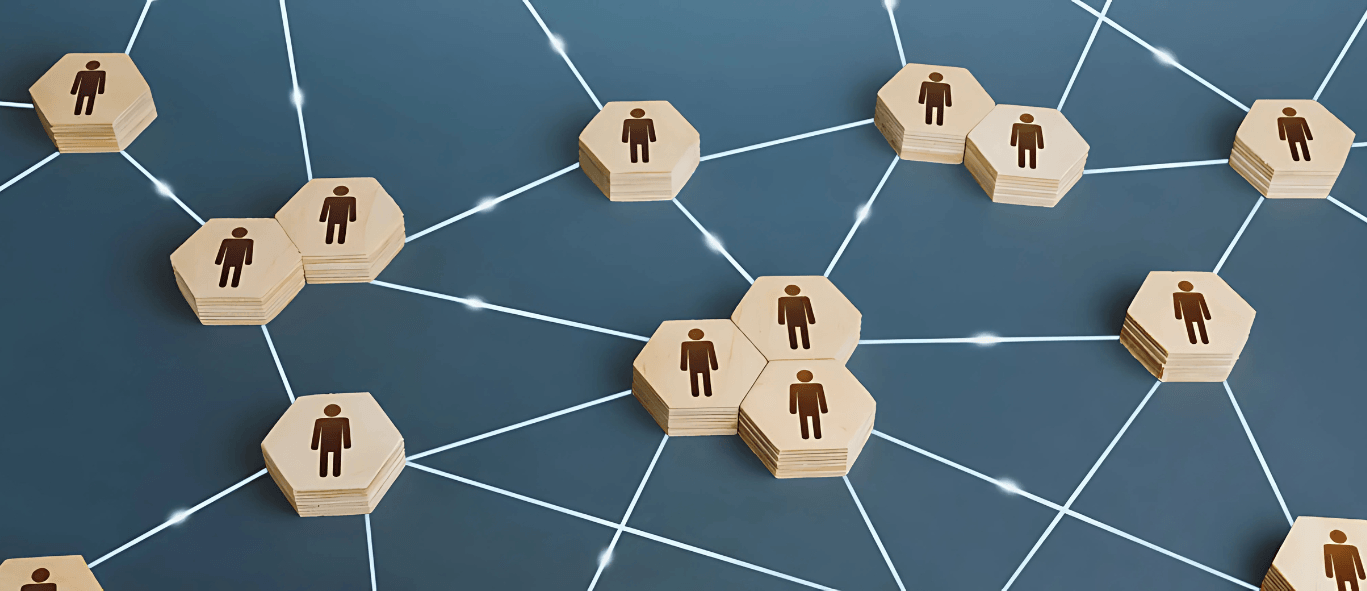
DAOs started as an Ethereum experiment.
Today, they govern over $25 billion in on-chain assets and are shaping how the internet funds infrastructure, rewards contributors, and builds in public.
Today, DAOs govern some of the largest DeFi protocols, allocating billions in grants, bootstrapping public goods, and even shaping regulatory narratives across various jurisdictions.
From multisig groups to fully on-chain treasuries, the DAO landscape has evolved into a structured, multi-layered ecosystem with real-world impact.
They are changing how people organise, govern, and allocate value at scale.
Whether you’re building smart contracts, contributing to governance, or designing new coordination systems, understanding DAOs is now foundational to working in Web3.
This guide provides a comprehensive overview of how DAOs operate, their models, tools, use cases, challenges, and the trends driving their development.
Let’s get started.
A DAO, or Decentralised Autonomous Organisation, is a system that enables groups of people to make decisions, manage funds, and govern shared projects without relying on a central authority.
Instead of corporate hierarchies or boardrooms, DAOs operate using smart contracts and transparent on-chain rules.
At the core of every DAO are a few fundamental components:
Aspect | Traditional Organization | DAO |
|---|---|---|
Governance | Centralised (CEO/Board) | Decentralised (token holders or members) |
Legal structure | Registered entities | Often on-chain, with legal wrappers optional |
Operations | Off-chain and private | Transparent and recorded on-chain |
Treasury control | CFO or finance team | Community-governed smart contracts |
Entry barrier | Hiring or invitation only | Permissionless or token-based entry |
This flexibility has led to a wide range of DAO models, each optimised for different goals, from protocol governance and funding public goods to investing, building, or curating.
Let’s explore the main types of DAOs shaping the ecosystem in 2026.
DAOs have evolved into a diverse ecosystem of coordination models, each tailored to a specific function, from governing billion-dollar protocols to funding public goods and curating digital culture.
Below are the primary categories shaping the DAO landscape today, along with how they’re used in practice.
They govern core smart contract protocols like upgrades, parameters, treasury, and ecosystem incentives.
For example:
Grant / Impact DAOs allocate funding to builders, researchers, and projects that drive public goods or ecosystem growth.
For example:
Investment DAOs pool capital from members to invest in startups, NFTs, or on-chain assets.
For example:
Service DAOs function like decentralised agencies by offering development, design, governance, or marketing services.
For example:
Collector and NFT DAOs curate, fund, and govern digital culture, art, and community-owned media.
For example:
Many DAOs today don’t fit neatly into one category. They blend elements of multiple types:
To understand how DAOs deliver on that mission, it’s important to look at how they operate day to day, how ideas become proposals, how decisions are made, and how treasuries are managed and executed.
Let’s break down how DAOs work in practice.
DAOs operate without managers, HR teams, or legal departments, yet they make high-stakes decisions, allocate millions in funding, and evolve complex systems in public.
How?
Through a transparent, rule-based process where code replaces hierarchy, and governance replaces management.
Every decision from protocol upgrades to ecosystem grants flows through a lifecycle of proposal, deliberation, voting, and execution.
Let’s explore the lifecycle of DAO coordination from governance models and voting mechanics to the tools that enable on-chain execution and treasury control.
DAOs' decisions follow a deliberate and transparent process.
This governance lifecycle allows communities to propose, debate, approve, and execute actions entirely on-chain or through structured off-chain workflows.
Here are the key stages:
Most DAO decisions begin with an idea: funding a new initiative, updating protocol parameters, modifying incentives, or onboarding contributors.
This stage typically involves:
This stage helps shape the proposal’s intent, anticipate objections, and gather alignment before any formal vote.
Before moving to a formal vote, many DAOs initiate a non-binding, informal poll, commonly known as a temperature check, to assess community sentiment.
This early step helps:
While non-binding, these signals often determine whether a proposal moves to a formal vote.
If early feedback is positive, the idea is formalised into a proposal with:
This proposal is then posted to the DAO’s voting platform, such as:
Most DAOs require specific formats, eligibility criteria, and a minimum submission window before voting begins.
Once live, the proposal enters a defined voting window, usually between 3 to 7 days, though some DAOs allow longer periods for complex decisions.
Participants can vote directly or delegate their tokens to trusted representatives. Voting models vary by DAO and may include:
Quorum thresholds and majority rules are often embedded in the DAO’s smart contracts or outlined in governance docs.
If a proposal passes:
Some DAOs use Zodiac modules to create conditions like time delays, oracle verification, or veto periods before execution occurs.
As tooling improves, this lifecycle is becoming more composable and automated with integrations across governance UIs, proposal templates, reputation systems, and even AI-powered assistants.
But the DAO governance lifecycle is about creating clear, accountable, and decentralised decision-making processes, i.e. one proposal at a time.
Let’s see different types of governance models.
The ecosystem has evolved beyond simple token-based voting. DAOs today experiment with models to balance efficiency, decentralisation, and expertise.
Model | Description |
|---|---|
Token Voting | 1 token = 1 vote. Simple, but favours whales. |
Delegated Governance | Token holders delegate votes to active representatives (e.g. Uniswap, Arbitrum). |
Quadratic Voting | Reduces whale dominance by making each additional vote costlier. |
Reputation-Based Voting | Weight based on past contributions or off-chain reputation (e.g. Gitcoin Passport). |
Multisig or Council | Small group handles quick decisions, often with community oversight. |
Hybrid models are increasingly common, combining token votes with subDAO councils, off-chain deliberation, and automated execution.
DAO participation now runs on a diverse, composable stack:
Many DAOs combine these tools with discourse forums, delegate platforms, and real-time analytics to streamline governance.
DAOs today manage treasuries ranging from a few thousand to several billion dollars. Treasury operations include:
The focus today has shifted toward programmable, modular treasuries with layered security, conditional flows, and DAO-native finance rails.
To understand how DAOs function reliably and transparently at scale, we need to explore the tech stack powering them from smart contract frameworks and identity layers to voting systems and execution modules.
A DAO is only as effective as the infrastructure it runs on. Today, the DAO tech stack has matured into a modular, composable, and multi-chain system, enabling organisations to operate at scale with security, transparency, and flexibility.
From smart contracts and frontends to reputation badges and automation layers, let’s break down the foundational components powering DAOs today.
Most DAOs operate on Ethereum and its Layer 2 ecosystems, which offer cost-effective, secure execution. The choice of base layer affects speed, tooling, and composability.
Popular DAO deployment environments in 2026:
Cross-chain coordination has improved via LayerZero, Axelar, and Wormhole, but security and execution finality remain non-trivial for multi-chain DAOs.
Frameworks let you launch and manage DAO logic without reinventing governance from scratch.
Key players today:
Tool / Framework | Highlights |
|---|---|
Aragon OSx | Modular DAO plugins with fine-grained roles and permissions |
DAOhaus v3 | Moloch-based with frontends, subDAOs, and summoning rituals |
Nouns Builder | Full-stack governance for Nouns-style auctions and proposals |
Juicebox | DAO-native funding with token issuance, revenue splits, and withdrawal conditions |
Modular DAO SDKs | Open-source libraries (e.g. Union, Origami) that allow roll-your-own governance models |
Many DAOs are also moving toward custom deployments with tailored permissions, execution logic, and governance upgrades, instead of relying on rigid frameworks.
There is a rise in non-token-based authority mechanisms. These tools help DAOs assign roles, reduce Sybil attacks, and reward meaningful participation.
These systems are increasingly being embedded into governance weight, working group permissions, and bounty access.
Building blocks for community participation:
DAOs often plug these into Discourse, Commonwealth, or CharmVerse for longer discussions and contributor coordination.
One of the fastest-growing areas in DAO infrastructure is automation, cutting down on human intervention for proposals, payments, and upgrades.
Automation is what enables DAOs to scale operations without centralised teams.
Observability is key. DAOs today use advanced dashboards to understand treasury flows, voter behaviour, and proposal impact.
As DAOs grow in size and complexity, they still face deep challenges ranging from voter apathy and execution delays to regulatory uncertainty and governance capture.
Let’s look at the key hurdles DAOs continue to navigate.
Despite their growing maturity and adoption, DAOs are still far from perfect.
The freedom and programmability that make DAOs powerful also introduce coordination bottlenecks, governance risks, and execution hurdles.
Here are the most pressing challenges DAOs continue to face.
One of the most persistent problems in DAO governance is low participation:
Even with delegation and incentive programs, turnout rates often remain below 10%, especially outside of marquee decisions. This weakens legitimacy and opens the door to governance capture.
Solutions in development:
DAOs aim to be open, but that openness invites manipulation:
Even in 2026, there’s no universal Sybil-resistant identity. DAOs rely on:
But trade-offs between privacy, inclusion, and security are still unresolved.
While many DAOs control massive treasuries, efficient capital allocation remains a challenge:
Efforts like Karpatkey, Llama, and Safe modules are addressing treasury management, but automating compliance and accountability is still a work in progress.
Many governance participants are:
This creates situations where decisions pass with unintended consequences or centralising effects. Protocols like Optimism and Arbitrum are trying to rebalance power through:
But the gap between informed contributors and passive token holders is still wide.
As DAOs gain traction, legal and jurisdictional challenges have intensified:
While legal wrappers (e.g., Otoco, Syndicate, Tally Legal) offer protection, the regulatory surface area is expanding, especially around payments, data privacy, and capital formation.
The biggest paradox DAOs face is this:
How do you scale governance without creating another version of centralised leadership?
Working groups, subDAOs, and contributor guilds offer more scalable models. But they also require:
DAO tooling is improving, but human coordination remains the hardest part of decentralisation.
DAOs today are powerful, adaptable, and more impactful than ever, but they’re still evolving. The next wave of innovation lies not just in better tooling but in smarter governance design: systems that are inclusive, efficient, and resilient.
Let’s look at the emerging trends shaping the next generation of DAOs.
DAOs are entering a new phase, which is more scalable, autonomous, and interconnected than ever before.
We’ve explored this in depth in our blog “How DAOs Are Changing the Future of Organisations”, where we break down how DAOs are redefining ownership, governance, and value creation in the digital era.
These trends point to a future where DAOs serve as the core coordination layer for decentralised ecosystems.
The internet was built to connect people. DAOs are showing us how to organise them without centralised platforms, corporate intermediaries, or borders.
In a world driven by digital economies and global collaboration, DAOs offer a new kind of institutional infrastructure. One where:
DAOs are already governing open-source protocols, DeFi systems, public goods, and community economies and doing so at scale.
What the internet did for communication, DAOs are beginning to do for coordination.
And this is just the beginning.
DAOs are no longer experiments on the edge; they’ve become the operational core of many of Web3’s most impactful systems.
From treasury management and grant funding to protocol upgrades and cross-chain execution, DAOs are proving that decentralised systems can govern with precision, transparency, and intent.
As the underlying infrastructure continues to mature, we’ll see even more organisations embrace DAO models by design, not by trend.
At Lampros Tech, we build DAO infrastructure for teams ready to launch or scale, combining custom governance, secure smart contracts, and automation-ready execution.
Run your DAO with clarity, flexibility, and trustless control.

A DAO (Decentralised Autonomous Organisation) is a blockchain-based system for coordinating people and resources without centralised leadership.
In 2026, DAOs operate using smart contracts, token-based or reputation-based governance, and modular tooling to manage proposals, voting, and treasury execution across chains.
DAOs come in various forms, including protocol DAOs (e.g., Uniswap), grant or impact DAOs (e.g., Optimism Collective), investment DAOs (e.g., Flamingo DAO), service DAOs (e.g., Raid Guild), and NFT collector DAOs (e.g., Nouns DAO).
Many DAOs now use hybrid models to combine funding, services, and governance under one structure.
The modern DAO tech stack includes Snapshot for voting, Tally for onchain governance, Agora for proposal tracking, Gnosis Safe for treasury control, and platforms like Otterspace and Dework for contributor management. Newer tools like Pairwise and AI delegates are also being integrated for improved decision-making and automation.
DAOs deal with low voter participation, governance centralization, Sybil attacks, inefficient treasury management, and unclear regulatory frameworks. Tools and design patterns are evolving to address these issues with automation, identity layers, and modular governance frameworks.
DAOs represent a new model of digital organisation open, transparent, and borderless. They enable collective ownership, programmable coordination, and decentralized decision-making. As Web3 scales, DAOs are becoming the default governance infrastructure for protocols, communities, and public goods.
Need DAO guidance?
Prepare for audits, DAO upgrades, and multi-chain builds without hiring delays.
Let’s Talk